


Author: admin
-
Alan Greenfield: The investment approach
Alan Greenfield discusses the investment approach to thinking about government services, and how it can deliver better outcomes to people.
-
Math made in heaven
Taylor Fry’s Win-Li Toh discusses where her passion to be an actuary came from and what keeps the inspiration fresh
As a kid growing up in a small mining town in Malaysia, Taylor Fry Principal Actuary Win-Li Toh always dreamed of going to Oxford University.
Toh says she was drawn to all that history of ‘great minds solving the world’s problems together’.
‘At the age of 18, my dream became reality through my love of maths,’ she recalls.
‘I enjoyed every moment of my time there but, at the end of it, had no idea what job I could do with a pure maths degree.
‘I took myself to a careers fair in London to find out and came across a couple of charismatic actuaries — yes, it is possible — and from there, my actuarial journey began.’
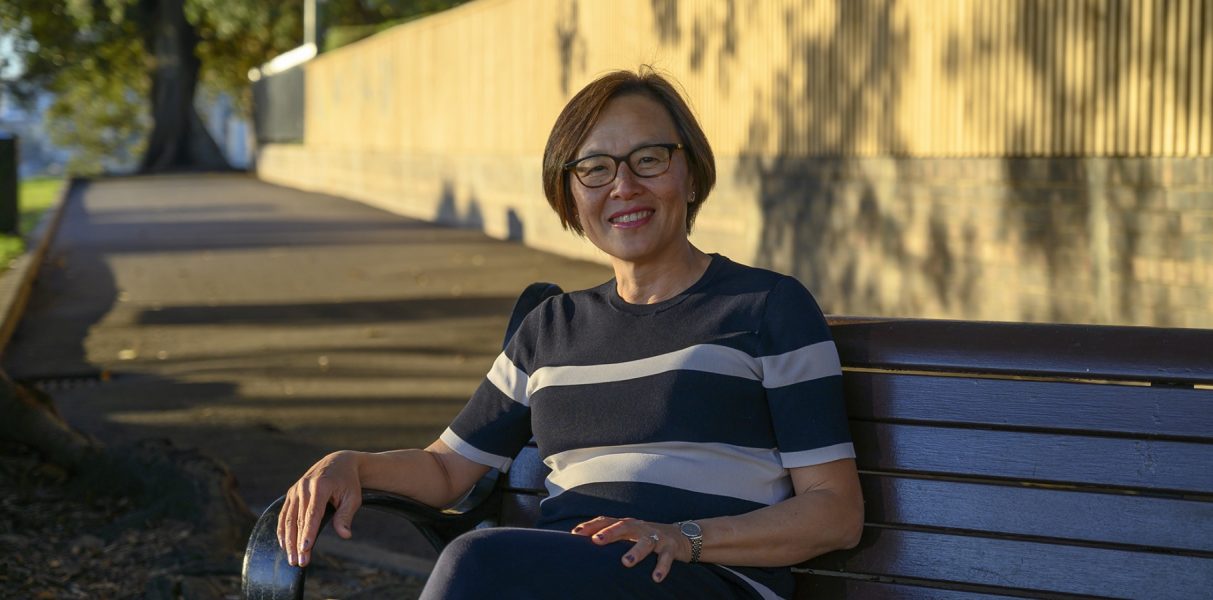
Win-Li Toh pictured
A focus on affordability
A couple of years ago, on a plane, Toh met Dr Patricia Berwick, an anthropologist who advises industry and governments around the world.
‘To my horror, Dr Berwick told me that insurance will be dead in 20 years because no one will be able to afford it.
‘Well, that sharpened my focus,’ Toh says.
‘I realised that there’s no point doing clever things if it’s not affordable for the people we’re doing it for.
‘Affordability may be one of the most challenging aspects of insurance, with pressure from all quarters, but it’s the most important service to our customers – and sound actuarial analysis is a key driver.
‘One area I’ve seen increasing demand for is fraud analytics, where the use of sophisticated actuarial analytics to detect fraudulent claims means insurers can lower prices for policyholders with genuine claims.’
Compassion in policy design
Toh, one of Taylor Fry’s leaders in its General Insurance practice, believes actuarial analysis enhances the ability for compassion in policy design.
‘In travel insurance, for example, actuaries analyse data from the Australian Bureau of Statistics and other sources to see how we can add mental health issues into policy design,’ she says.
‘This might allow a traveller stuck overseas due to a mental health condition to make a legitimate claim and get home in the same way as someone with a physical condition, such as a broken leg from skiing.
‘Without this analysis, insurers have no way of knowing how to price for mental health and other medical conditions in a systematic, data-driven and sustainable manner.’
Sceptics and optimists
Toh says she has noticed industry players transform over the years, explaining that she once saw actuaries as natural sceptics trained to see risk, and underwriters as eternal optimists selling to the customer.
‘Of course, I had no statistical proof of this,’ she quips.
These days, Toh sees a trend towards greater collaboration and assimilation between the two roles.
‘There is more focus on understanding risks better to inform pricing decisions across personal and commercial lines, facilitated by increased granular data, as well as greater competition.’
The social good
Asked to describe the achievement she is most proud of, Toh points to the work Taylor Fry does to take insurance principles and techniques across different expert areas, and to pioneer their application in the social sector and for social good.
‘The insights into improving social outcomes now extend across justice, social housing, welfare, disability employment and vulnerable children,’ she says.
‘This work is the result of the significant assimilation of ideas by our actuaries and governments on both sides of the Tasman, as well as academics, policymakers, public servants, economists and those who deliver the services, such as NGOs.
‘It has now come full cycle, with the learnings coming back to insurance, especially in workers’ compensation and compulsory third-party sectors.
‘Our learnings combine the technical perspective with a people-centric view in modelling longer-term outcomes. It’s very timely.’
Welcoming the spotlight
Toh is optimistic about the outlook for the industry and says Insurers should welcome the current Royal Commission into Misconduct in the Banking, Superannuation and Financial Services Industry.
‘All industries benefit from having a spotlight shone onto them every so often,’ she says.
‘It’s not about trying to root out corruption or overhaul the industry.
‘Rather, when something has been in place for a long time, we can forget why we’re doing what we’re doing and who it’s all for.
‘A review sharpens our focus and, yes, it will draw out some poor practices and a few bad eggs, but for all of us, it serves as a useful reminder of why we are here and who we are trying to help.’
She adds that the main change needed is clarity on what’s covered, without the customer having to trawl through lengthy jargon, so there are no surprises when calamity strikes.
‘It’s about transferring the balance of power to people.’
Fantastic time to be an actuary
Looking to the future, Toh sees the actuarial role widening.
‘Yes, actuaries have a very specific skill set but, increasingly, people want to know why we advise them to take a particular course and look to us to communicate it clearly and simply to their customers.
‘It’s a fantastic time to be an actuary — we’ve always loved modelling and problem solving — but suddenly big data and all that technology has opened enormous possibility.
‘Today, we can be anything from data scientists to entrepreneurs in the insurtech space.’
For Toh, who presents and runs educational courses and training for a variety of audiences, this new environment is ideal for actuarial training.
‘The structure and discipline of our training ensures we can embrace information as it continually evolves and improves,’ she says.
‘In addition, the integrity of our profession is embedded in everything we do. Key to the actuarial brand is that we’re smart and trusted to do what’s right.’
GI Breakfast Panel
Win-Li Toh will join the panel at this year’s General Insurance Breakfast to be held at the Westin Hotel in Sydney, and says it’s critical in this climate of scrutiny to remember the purpose of insurance.
‘It’s about pooling risk and providing a safety net for those who need it most. As actuaries, we can be caught up in the intellectual challenge of sophisticated modelling, but we’re there to help ensure those nets are sound and sustainable.
‘If the Hayne review reminds us we are here to help people in a time of unexpected calamity and to make sure they’re not facing those times alone, then this will have to lead to a better customer experience.’
Toh says events like the GI Breakfast enable the industry to explore the conversation together, and this year Taylor Fry is sponsoring the coffee carts.
‘In a way, it’s a fun homage to that 1600s coffee house of Edward Lloyd, where merchants and ships’ captains would discuss their business — this, of course, became Lloyds of London.
‘Come solve the problems of the world over an intimate chat and a good coffee.’
As first published by ANZIIF, 25 September 2018
-
When analytics projects go wrong
Many organisations have seen big-ticket analytics projects turn into a morass of expense, confusion and lacklustre results. While some mistakes are unavoidable, there are ways to make the best of such experiences.
When studying at university, I was fortunate enough to have lunch with a senior academic from one of Australia’s largest medical research institutions. I impertinently asked him why so many of the big-ticket research projects (cancer, brain science, genetics etc) that attracted significant funding often underdelivered on their promised findings. He gave my question more time than it deserved. He believed that there was an element of a sales cycle in big medical research projects; to secure funding and high-quality students you had to aim big, knowing that progress is likely more modest. But it is vital that you have continuity so that over time you can incrementally build on progress towards great things.

This sales cycle exists for big analytics projects too; I’ve seen and heard about many cases where a big bold vision to transform an organisation’s use of data has woefully underdelivered. In some cases the results are so bad that a project is abandoned altogether. What are we to make of this? Is there a better way?
Here are some thoughts.
- Do not ignore incrementalism: There is nothing wrong with a big bold vision, particularly if it’s the best way to gain stakeholder buy-in. However, the reality is that most organisations see incremental improvements in their capability and results over time. If you’re evaluating a potential new project, try to ensure that it builds on what you’ve already got and that, at worst, it will still deliver some useful incremental progress for next time. This means injecting a dose of realism into the vision.
- Your hard problems will often remain hard problems: Sometimes part of a justification for a big analytics project is to solve a deficiency in the current setup. For example, the ability to better manage customers with complex product holdings. In many cases, if these were easy problems to solve then they would already have been solved. Radically changing an IT system or an analytics solution might just repackage the issue into a different form.
- Use consultants effectively: Consultants are a fixture of the analytics landscape and their advice is often sought for big change projects (disclosure: I am one!). However, they will usually not have the same end-to-end view of the business as internal teams, and they will not have to pick up the pieces if things go wrong. Over-reliance on consultants or lack of knowledge transfer in a project creates risk for an organisation.
- Laying good groundwork is important: Much activity these days is done under the umbrella of ‘agile’ management and minimum viable products. Such approaches aim to rush to a solution and fill in the details later. Agile management has been hugely valuable in breaking down previously monolithic projects with giant Gantt charts. There is a risk of going too far; sometimes there is value in laying the foundations (good data flows, scalable infrastructure etc) rather than racing ahead to the final product. While less sexy, it is possible to sell such groundwork if it aligns well with longer-term analytics ambitions.
- When a project goes wrong, look for the value: Even if a project ends up in the scrapheap, there will usually be progress that can be scavenged. Some of this might be higher-level learnings (e.g. discovering the weakness of an analytics platform that guides future decisions). Others could be lower level, like new code or models that solve a smaller problem that can be re-purposed. While sifting through a failed project can be painful, a blanket deletion can be worse.
Not every analytics project will be a success, just like not all medical research yields spectacular cures. But both have the virtue that there is always a new opportunity, particularly when you appropriately learn from the past.
As first published by Actuaries Digital, 17 September 2018
-
Taylor Fry co-founder Martin Fry reflects on his life, work and the path ahead
After an eventful 43-year career, the past 19 at the company he co-founded, Principal Martin Fry is taking a hike. Literally. On the eve of his retirement at Taylor Fry, Elizabeth Finch sat down with Martin to look back on a lifetime of quiet achievement, his passionate aversion to hierarchy and the guru that inspires him to this day – as he prepares for a long, long walk into the sunset.
How did you know you were ready, that it was the right time to finish up?
I actually had no intention to retire, but a medical issue last year focused my mind and, once the decision was made, I began really looking forward to it. It’s almost like the last leg of a marathon, hoping I won’t collapse but will just make it over the line!
Back to the beginning, what was the impetus to start your own company?
Greg Taylor, whom I met when we worked together in the 1970s, and Alan Greenfield were the impetus. We had all felt some unhappiness working at big firms and realised this was partly due to spending more time in meetings and managing people than doing the actuarial work we loved. It was just a symptom of the normal pyramid structure, but it was our incentive, along with a real desire to build a place without internal competition and politics, where we could do good for our clients and compete only with our competitors.
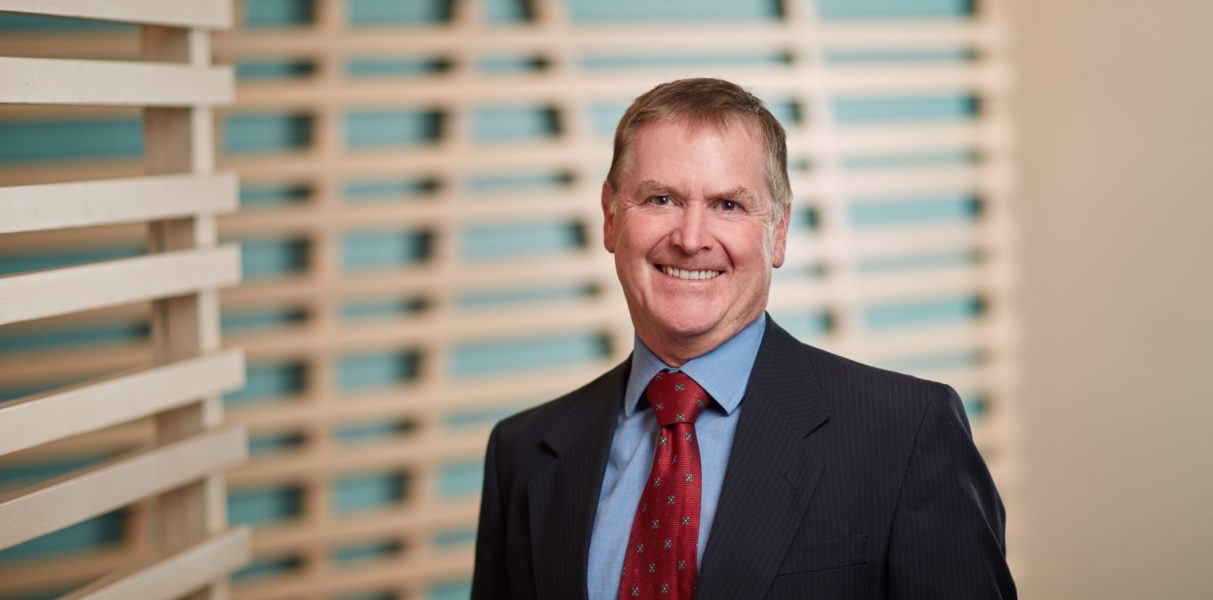
Martin Fry in our Melbourne office
So we created a flatter structure, where we all had shareholdings at the start, sharing the risk. It was a great feeling of joint ownership and joint hope for success.
What were you hoping to achieve in starting a less hierarchical business?
Rather than a few partners making all the decisions, we wanted to make Taylor Fry more democratic, a workplace where everybody has a part to play, everybody is important and valued, and everybody has a voice. Not one person is dominant, bullying or driving it.
Do you think you succeeded?
Broadly, yes – more so than at any other place I’ve ever worked, especially at the bigger firms, where the culture was often to reward a few stars financially, based on personal performance.
It was very deliberate at Taylor Fry – Greg was very strong on this – that we should have no financial incentives to profit at the expense of others in the firm. We knew we risked losing the highfliers who might feel they could do better with an individual reward system at another firm, but that hasn’t happened.
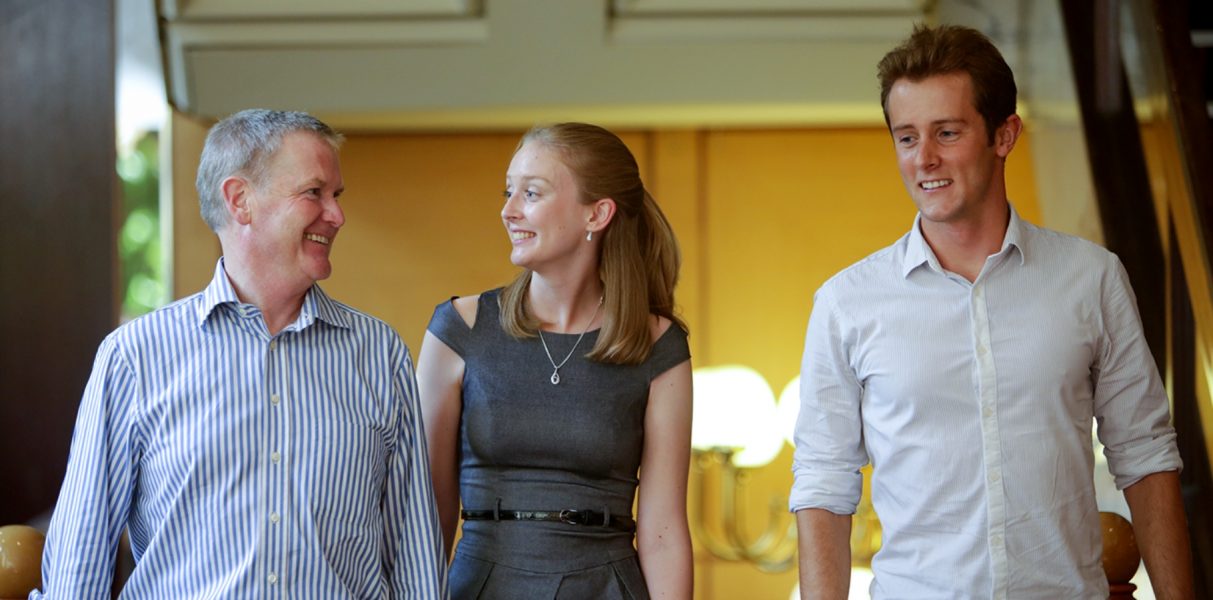
Martin Fry with Jess Egan and Scott Duncan
We have brilliant people at Taylor Fry who are prepared to share the rewards of their efforts with others just for the good of the firm, and this inspires everyone. Most importantly, every person knows they’ll be treated fairly and there’s no reason for anyone to try to benefit at the expense of others. That’s a fundamental message to convey.
Over the years, did you have to compromise on your original ideals?
Absolutely. We were a bit naïve to think we could continue to grow and hold on to a flat structure, especially once we expanded into Melbourne and Wellington.
A few people wanted to stay small along the way, but you need to keep growing to give people a clear career path. For us, that’s always meant making decisions about expansion collaboratively, and by letting people know why we’re doing it and what we’re doing, rather than just imposing change.
Right from the start, we said everyone is entitled to know everything they want to know – all you have to do is ask. It’s difficult for a lot of the people we employ who are naturally introspective, so we continually reinforce the message in an encouraging way by giving them the opportunity to do it, so they feel more at ease.
What has been the best thing about owning your own business?
Feeling we’ve given people a worthwhile place to work, where their contribution is recognised and acknowledged. It’s partly enabled by our size – everyone knows it’s just the 75 of us. Maintaining the feeling that we’re all in it together – successes and failures – is vital because people really appreciate that sense of belonging. It’s going to be a challenge for us as we continue to grow. What will help is our hiring strategy – we always consider how a person will fit in with everybody else. It’s quite a unique outlook to be seeking people not only for what they can do but for who they are.
What do you think you’ve learned personally from this 19-year experience at Taylor Fry?
If you give people more responsibility than their level would normally dictate, they respond very well. I’ve found you shouldn’t necessarily treat people as juniors just because they’ve served only a couple of years of actuarial training.
People can grow into positions and you should always encourage them to stretch themselves as much as they can and not be content to just jog along and allow time to lift them up with promotions.
Who have been the mentors that helped shape the way you work?
I’ve had lots! But the strongest influence has been Greg Taylor. He has always been one of the gurus of the actuarial profession in Australia and I was always trying to live up to Greg’s expectations – I felt very much the junior partner, although he never lectured me. It wasn’t his style. He didn’t go as far as saying he was proud of me, either – it wasn’t that kind of dynamic – he was just very encouraging. We’ve always had an open relationship and it hasn’t been necessary to put into words what we think of each other – it’s simply mutual respect.
Whenever I had to make a judgment call, I’d think, what if I was stuck in the witness box like Greg for days? And, if I couldn’t justify it, I’d do more work until I could justify it.
Is there any intriguing anecdote you’d like to share about your time at Taylor Fry?
The most striking one I remember is about Greg and it has inspired me my whole life.
Back in the 1970s, FAI Insurance [bought by HIH in 1999 from controversial financier Rodney Adler and later embroiled in the HIH collapse*] had great difficulty renewing its insurance licence. On two occasions, the Insurance and Superannuation Commission (now APRA) refused its application and, each time, Greg appeared in court as an expert witness for the Commission.
During this period, Greg was grilled for two or three days straight by a battery of QCs about why FAI shouldn’t get its licence. And it was this appearance over those few days that left a lasting impression on me. He was always cautious and very professional but, after that grilling, he was absolutely methodical and impeccable about being able to justify every single actuarial opinion he gave. And that attitude stuck with me my entire career.
Whenever I had to make a judgment call, I’d think, what if I was stuck in the witness box like Greg for days? And, if I couldn’t justify it, I’d do some more work until I could justify it.
It has been incredibly useful to reflect on that experience – I tell it to all the young actuaries.
I’ve also given evidence now in several legal cases and in every single instance, the actuaries had a feeling in their bones they were being asked to do something wrong or illegal, but they did it anyway.
My advice has always been: if you ever reach the stage where something doesn’t feel quite right, picture yourself being quizzed by a really serious QC who’s trying to discredit you. Would you be able to stand up and say I did it for this reason and would it hold water? And if you can’t explain yourself honestly, you shouldn’t do it. Because I’ve seen the results of it and it’s catastrophic for the individuals involved.
*The HIH collapse is considered to be Australia’s largest corporate failure. It was the country’s second largest insurance company when it was placed into liquidation in 2001 with debts of about $5.3 billion. The resulting Royal Commission led to some of the management team going to prison, including HIH director Rodney Adler.
Given the ongoing Royal Commission into Misconduct in the Banking, Superannuation and Financial Services Industry, do you think increased regulation and legislation is inevitable in the future?
It’s inevitable, but not necessary. It’s a bit depressing we have to rely on black-letter law for regulation. We don’t seem to be able to rely on people doing the right thing. People know what’s ethical and what’s right and wrong. You can feel it. It can be within the black letter of the law but it’s still unsavory. And that’s sad.
Greg Taylor was inspiring on this subject. He is probably the most ethical person I have ever met. And fearless. If something was the right answer or the right thing to do, Greg would stick to it no matter what. To maintain that attitude and feed it down through the company as it grows is enormously important.
Being as ethical as you can is a long-term survival necessity, otherwise you just can’t sleep at night.
How, then, do you balance your personal ethics with the bottom line?
I don’t think we’ve ever lost any work by being too ethical. We’ve probably gained loyal clients by being ethical. We have many clients who have been with us for an awfully long time. There’s more upside than downside to being ethical, certainly over the long term.
Take the recent Royal Commission findings. Eventually, your chickens come home to roost.
Being as ethical as you can is a long-term survival necessity, otherwise you just can’t sleep at night, worrying you’re going to be found out. Everyone at Taylor Fry can probably sleep well at night.
Do you see the role of actuarial work changing in the future?
When I first began consulting in general insurance, there were only a handful of actuaries in Australia involved in narrow technical areas.
Nowadays, there are more than 2,000 actuaries in Australia and they are viewed much more as trusted advisers. Clients are saying, you’ve looked at all my information in detail, what business advice can you give me? Not just what’s the number at the end of the balance sheet? That’s a huge step forward.
And this will only increase. The area of data analytics and social work, like the social welfare work that Alan’s doing – it’s amazing. The changes in these areas, the reliance on analysis, on data, on analytics, has been a sea change in my working life.
Advances in technology will also continue to enable our work, especially in an environment where the pressure to complete work more quickly and accurately is greater than it used to be.
To retirement – how are you feeling about the prospect?
Excited! In the past few days, our third grandchild was born, and I’m excited about travelling. In June, I’m doing the Coast to Coast Walk in England from The Lakes District to Yorkshire, which is just the warm-up for a longer 800-kilometre walk in Spain, the Camino trail, across the Spanish countryside in 2019. It will take about three months all up. I’m actually a real history buff and my wife Rosemary shares the enthusiasm. We already have other plans for next year, too, a much longer trip taking in The War of the Roses and The Hundred Years’ War sites. A chance to really indulge our love of history will be great.
What will be on your mind as you wake up on your first day of retirement?
A jumble of things. In preparation for my long hike, I have a fitness regimen, so I’ll finish up on Friday 25 May and, on the Saturday, I’ll be up early and taking part in my usual weekly competitive run. I’ll probably be drinking water on my farewell night. Well … maybe not!
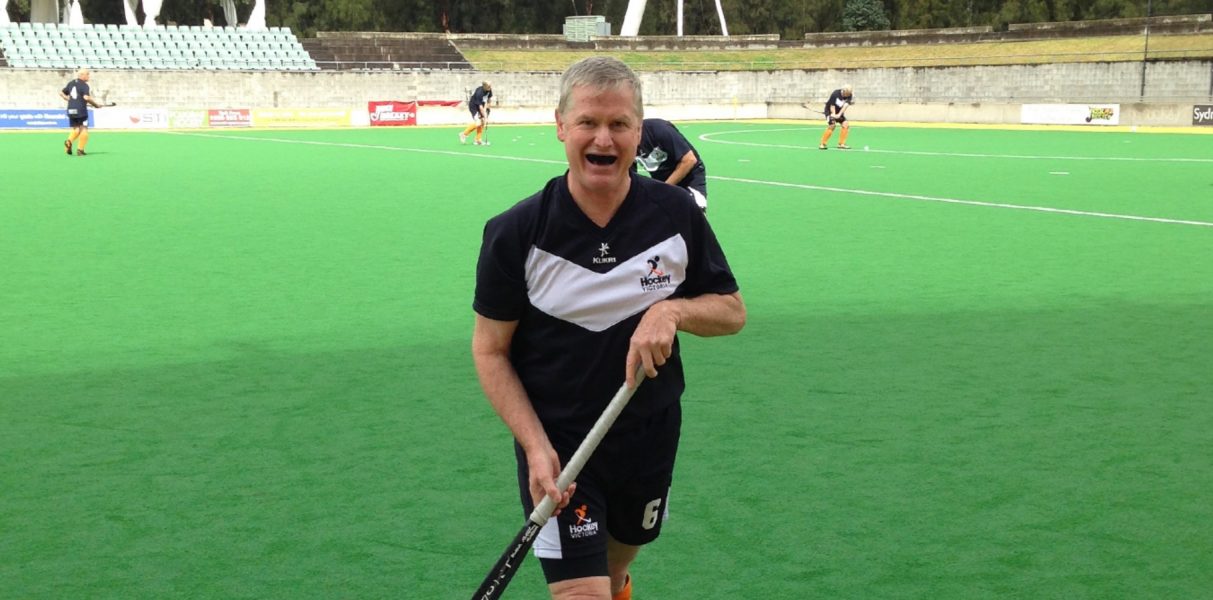
Martin Fry, outstanding in his field.
Lastly, what do see as your legacy? How would you like to be remembered?
When Greg left the firm, I was surprised how quickly he wasn’t missed. You always expect you’re integral to the firm, that there’ll be major disruptions when you go but Greg left with hardly a ripple. So the legacy I’d like to leave is that the firm has really good people who are capable of doing anything, without feeling constrained by anybody above them or below them in the age stakes or hierarchy or anything else. Better still is the day after you’re gone, you’re not missed. I think that’d be great!
Published 23 May, 2018
Enjoy this read? Take a look at our piece on Taylor Fry co-founder Greg Taylor
Want to know more about the history of Taylor Fry? Check out our About page
-
RADAR 2018
Welcome to RADAR — Taylor Fry’s annual roundup of the nation’s insurance landscape

RADAR 2018 gives insurers an inside view of the industry, drawing on the most comprehensive and long-running survey of insurers and brokers in Australia, the JP Morgan/Taylor Fry General Insurance Barometer.
In the survey, insurers tell us what they’re thinking and, in radar, we distill what this means for the market. We also take time to explore the latest trends, news and ideas in insurance.
Our general insurance team reports on the drivers of major change in Australia and New Zealand throughout 2017, and pinpoints the challenges and opportunities in 2018 and beyond.